


Who may be considered?
- Those with teeth with advanced material loss
- Those whose existing crowns or bridges need to be renewed
- Those who are planned to have fixed restorations on implants
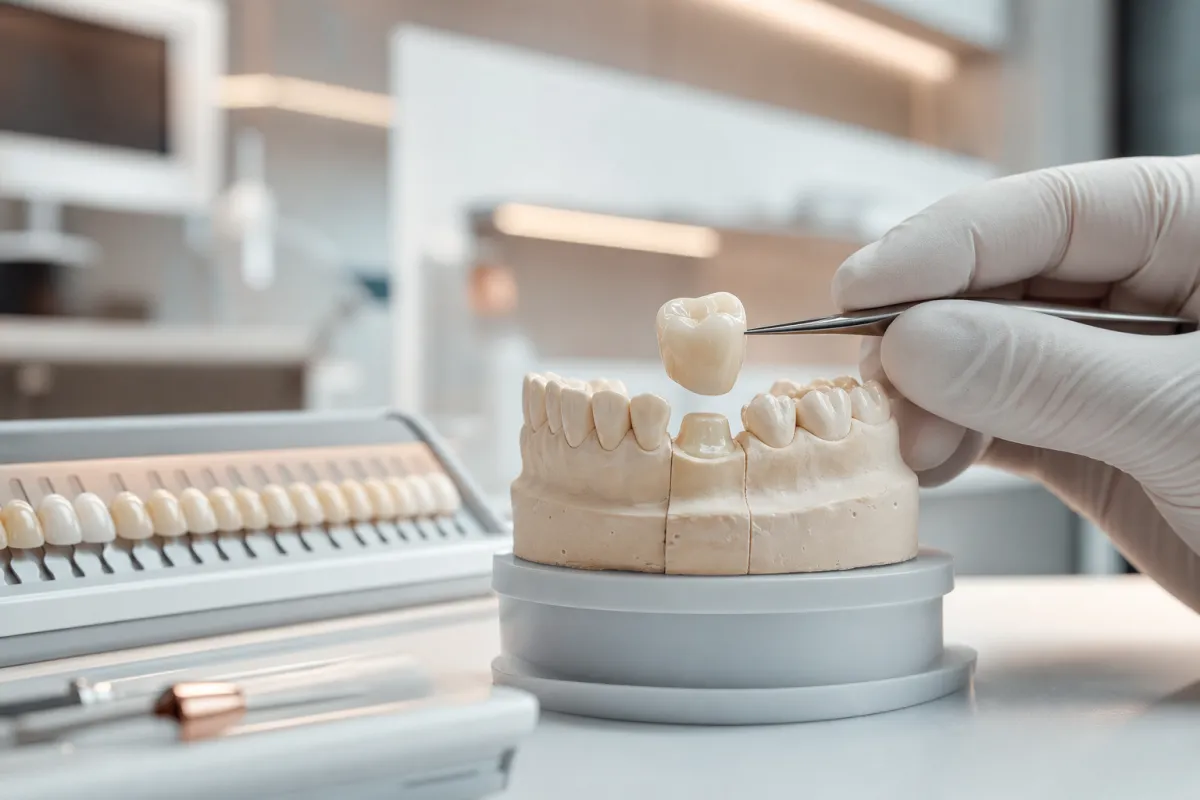
Ceramic solution planned by considering aesthetics, strength and occlusal requirements for dental or implant-supported restorations.
Book an appointmentZirconium based ceramics; It can be evaluated in case of advanced material loss of teeth, renewal of existing large restorations or completion of missing teeth with fixed restorations. Thickness, infrastructure, color and surface character of the restoration; It is determined according to the position of the tooth, remaining healthy tissue, occlusal forces and aesthetic expectations. Not every tooth needs to be crowned; If a more conservative treatment is possible, that option is evaluated first.
Clinical and radiographic evaluation
Performing gum health and bite analysis
Selecting the appropriate material and restoration type
Taking digital or classical measurements after the necessary preparation
Implementation of the restoration after the try-in, fit and occlusal checks
Regular cleaning of the tooth-gum junctions, use of appropriate interdental cleaning aids under the bridge and periodic control are recommended. If there is teeth grinding, a protective night guard may be considered.
The appropriate method is selected according to clinical findings and individual needs.
It is a restoration that covers the area around a single tooth with advanced material loss.
Under suitable conditions, it completes the missing tooth gap with adjacent supports.
It is a single or multi-member fixed restoration planned on the implant.
Material selection is not based solely on appearance. Remaining tooth tissue, gum level, discoloration, bite, parafunction and opposing teeth are evaluated together.
Depending on the case, composite restoration, porcelain laminate veneer, lithium disilicate restoration, implant or removable prosthesis options may be considered.
No. Whitening, bonding, orthodontics or laminate veneers may be more protective options.
No. They are ceramics with different structures and usage areas; The choice is made based on clinical need.