


Who may be considered?
- Those who have crooked, gapped or eruption problems in their teeth
- Occlusal relationship should be evaluated from an orthodontic perspective
- Suitable patients whose teeth positions need to be corrected before the smile plan
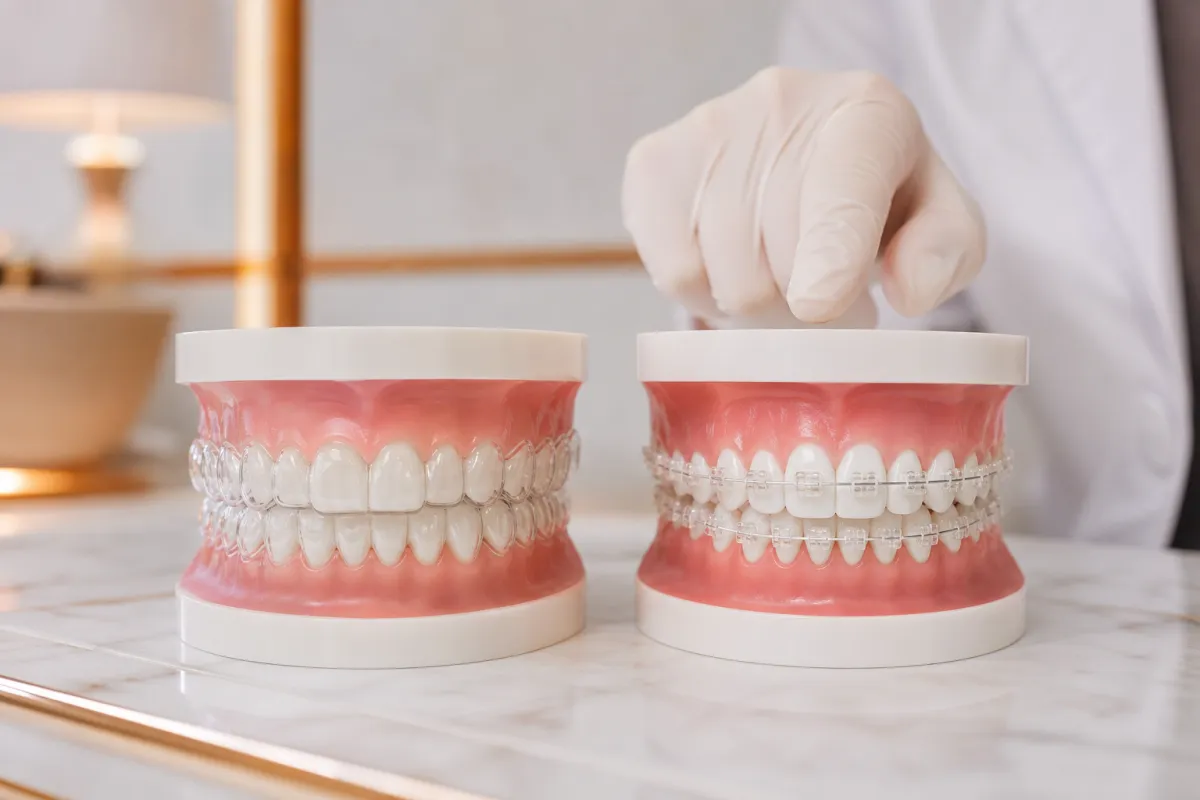
Diagnosis and treatment planning of tooth alignment and jaw relations with fixed appliances or clear aligners.
Book an appointmentOrthodontic treatment involves evaluating the position of the teeth and the relationship between the jaws in terms of function, oral health and aesthetics. The clinical examination is supported by photographs, digital measurements and necessary radiographic records. Fixed braces, clear aligners or growth period-specific appliances can be planned according to the needs of the case. At the end of the treatment, a retention phase is required to maintain the new position of the teeth.
Clinical examination, photographs, measurements and radiographic records
Analyzing tooth and jaw relationships
Evaluation of treatment options, duration and patient compliance
Regular check-ups throughout active treatment
Maintaining the result with retainers
Braces or plates should be used as recommended, oral care should be maintained carefully, and follow-up appointments should be adhered to. After active treatment, the retention protocol should not be interrupted.
The appropriate method is selected according to clinical findings and individual needs.
Controlled movement is achieved with attachments and wires bonded to the teeth.
In appropriate cases, treatment is planned with sequential, removable plates.
It is evaluated in selected jaw relationships during the growth period.
Clear aligners and fixed braces are not equivalent in every case. The complexity of the case, gum health, growth and patient compliance are important in choosing the method.
In limited cases, restorative camouflage or treatment-free pursuit may be considered; In adult cases involving the jaw skeleton, orthognathic surgery evaluation may be required.
The selection is made based on the complexity of the case, targeted movements and patient compliance.
If retainers are not used as recommended, movement may occur over time.