


Who may be considered?
- Those who experience bleeding gums while brushing or spontaneously
- Those with receding gums, sensitivity or bad breath
- Those with suspected loose teeth or periodontal bone loss
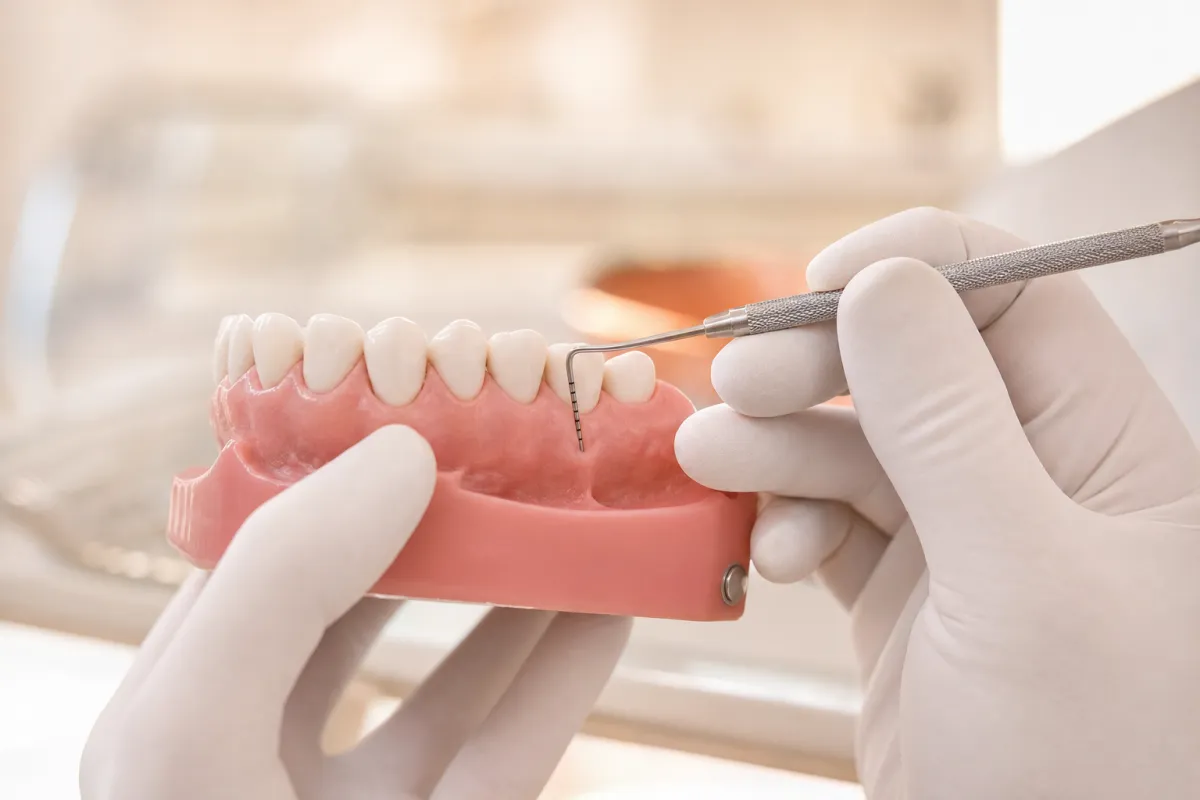
Diagnosis, treatment and care planning of gum bleeding, recession and diseases in the tissues supporting the teeth.
Book an appointmentIn periodontal evaluation, gum bleeding, pocket depths, recession, tooth mobility, plaque and tartar accumulation and bone levels are examined. The first step of treatment is usually oral care education and tooth surface-root surface cleaning. In advanced cases, surgical or regenerative approaches may be required. Regular periodontal care after treatment is important in keeping the disease under control.
Periodontal examination and necessary radiographic records
Assessment of personal risks and oral care habits
Scaling and root planing if necessary
Re-evaluation of treatment response
Surgery and regular care plan in necessary cases
Daily brushing and interdental cleaning, avoidance of smoking, and compliance with periodontal care intervals determined according to personal risk are recommended.
The appropriate method is selected according to clinical findings and individual needs.
It involves the removal of dental calculus and root surface deposits.
It is evaluated in appropriate cases where non-surgical treatment is not sufficient.
It is planned according to sensitivity, tissue thickness and aesthetic requirements.
Treatment selection varies depending on the stage of the disease, risk of progression, smoking, systemic diseases and oral care. Continuous bleeding should not be considered normal.
Surveillance without treatment is not appropriate in active disease; however, the need for surgery may be reassessed after response to nonsurgical treatment.
Persistent bleeding may be a sign of inflammation and requires periodontal evaluation.
Since the risks and plaque control continue, the disease may progress again if regular care is not carried out.